
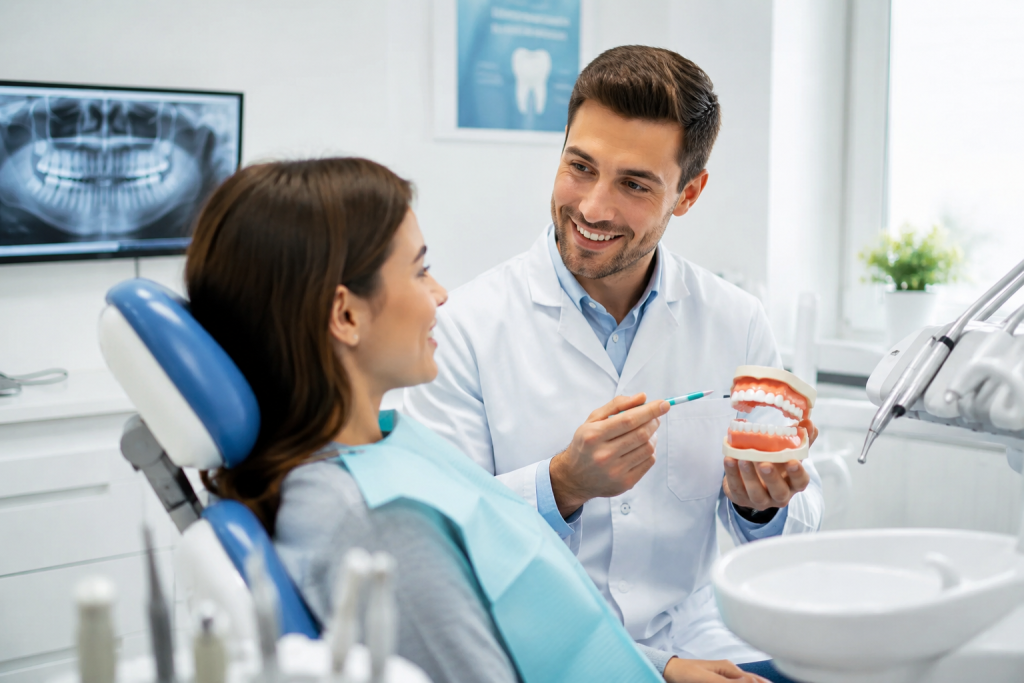
You want a discreet, modern way to straighten teeth without the metal-tray look, and Invisalign in San Jose, CA offers clear aligners that fit your lifestyle and schedule. Invisalign uses a series of nearly invisible, removable trays to move teeth gradually, so you can eat, speak, and smile with less interruption than traditional braces.
A local San Jose provider can evaluate alignment needs, explain how treatment compares to metal braces, outline costs and payment options, and guide you through what to expect from start to finish. This article will walk through candidacy, choosing a qualified clinician nearby, daily care for aligners, and common questions so you can decide whether Invisalign fits your goals and routine.
How Invisalign Works
Invisalign uses a series of custom, clear plastic aligners to move teeth gradually. Treatment relies on precise planning, regular monitoring, and patient compliance to produce predictable tooth movement with less visible hardware.
The Science Behind Clear Aligners
Invisalign aligners are made from SmartTrack® medical-grade polyurethane designed to apply controlled force to teeth. Each tray is slightly different, shifting teeth a fraction of a millimeter per stage. That incremental force stimulates remodeling of the periodontal ligament and surrounding bone, allowing teeth to move safely.
Digital 3D scans and software map current tooth positions and the target outcome. The lab fabricates each set of aligners from that plan so forces are distributed in sequence. Attachments—small tooth-colored bumps bonded to teeth—help the aligners grip and deliver torque when rotations or vertical movements are needed.
Regular checkups let the clinician verify biological response and adjust the plan if teeth move differently than predicted. When worn 20–22 hours per day and changed on schedule, aligners closely follow the digital treatment path and shorten surprises.
Step-By-Step Invisalign Process
Initial consultation: the clinician examines bite, takes X-rays if needed, and captures a digital scan or physical impressions. They discuss goals, expected duration, and estimated cost.
Treatment planning: the dentist or orthodontist uses ClinCheck® or similar software to create a 3D treatment map showing each stage. Patients review projected outcomes and approve the plan before fabrication.
Aligner delivery: patients receive multiple sets of aligners and instructions on wear time, oral hygiene, and caring for trays. Typical change intervals are 7–14 days based on clinician guidance.
Follow-up visits: appointments occur every 6–10 weeks to monitor progress and receive new batches of aligners. Refinements: if the teeth need additional movement, the clinician requests refinement trays to fine-tune alignment.
Retention: once desired alignment is achieved, patients wear retainers—often clear removable retainers or bonded retainers—to maintain results long term.
Key Benefits for Patients
Appearance: clear aligners are nearly invisible and fit snugly over teeth, making them discreet for work or social life. Most people notice little change in speech after an initial adjustment period.
Comfort and hygiene: smooth plastic reduces soft-tissue irritation compared with metal brackets. Removability allows normal brushing, flossing, and eating without dietary restrictions.
Predictability and convenience: digital planning shows a visual outcome and estimated timeline. Many treatments for mild-to-moderate crowding or spacing finish in 6–18 months depending on complexity.
Lifestyle fit: aligners suit athletes, musicians, and professionals who need minimal interference. Cost and eligibility vary by case; a consultation clarifies whether Invisalign is appropriate and what steps follow.
Comparing Invisalign and Traditional Braces
Invisalign and traditional braces differ in visibility, comfort, and daily habits. Each option affects appearance, eating routines, and treatment management in distinct ways that matter to patients in San Jose.
Aesthetic Differences
Invisalign uses clear, nearly invisible thermoplastic aligners that fit over teeth. Many patients choose them to avoid the metallic look of braces for work or social situations.
Traditional braces feature metal brackets and wires that are visible when smiling. Ceramic braces reduce visibility but still show brackets and require careful maintenance to avoid staining.
For front-tooth alignment, Invisalign often achieves subtle movement without noticeable hardware. Complex bite corrections sometimes require the mechanical advantage braces provide, which can move teeth in ways aligners cannot.
Providers in San Jose frequently show before-and-after photos so patients can compare expected visual outcomes. Financing and insurance may influence choice, but aesthetic preference remains a primary driver for many adults and teens.
Comfort and Fit
Invisalign aligners are custom-scanned and smooth, reducing gum and cheek irritation compared with metal brackets. Patients usually report mild soreness for a few days after each tray change rather than persistent rubbing.
Brackets and wires can cause sores and require occasional adjustments that produce sharper discomfort. Orthodontists often place protective wax and make wire trims to alleviate irritation.
Aligners require precise fit and patient discipline—wearing them 20–22 hours daily—and poor compliance slows results. Braces enforce continuous force without relying on patient behavior, which can lead to more predictable progress for some.
Both treatments can cause temporary tenderness as teeth shift. Local providers tailor pain-management advice, like OTC analgesics and soft-food recommendations, to individual tolerance.
Lifestyle Impact
Invisalign allows removal for eating and cleaning, so patients maintain normal diets and brush easily. This lowers the risk of staining, cavities, and gum problems when compared to fixed appliances.
Braces restrict certain foods—sticky, hard, or crunchy items can break brackets—and require meticulous hygiene with interdental brushes or water flossers. Social habits may also change, such as avoiding popcorn or chewing ice.
Aligner wear requires routine cleaning and secure storage when removed to avoid loss. Travel and active sports may need special cases and, in some contact sports, mouthguards over either appliance.
Orthodontic appointment frequency differs: Invisalign often needs fewer in-office wire adjustments but periodic check-ins for new sets, while braces require regular tightening visits. Patients weigh convenience, dietary freedom, and maintenance when choosing between the two.
Who Is a Candidate for Invisalign?
Invisalign works best for people who want a discreet, removable option to straighten teeth and can commit to wearing aligners about 20–22 hours daily. Costs, oral hygiene habits, and the complexity of the bite all influence candidacy.
Suitability for Different Ages
Teenagers and adults make up the majority of Invisalign patients in San Jose. Teens benefit from teen-specific aligners that include compliance indicators and allowance for erupting teeth. Adults often choose Invisalign for professional or aesthetic reasons; treatment integrates easily with work and social life because aligners are nearly invisible.
Children under 12 rarely qualify because their jaws and baby teeth are still changing. Orthodontists evaluate dental development with X-rays and growth forecasts before recommending aligners to younger patients. Patients of any age must maintain good oral hygiene and be able to wear aligners consistently to achieve predictable results.
Types of Dental Issues Addressed
Invisalign corrects many common alignment problems: crowding, spacing, mild to moderate overbites, underbites, and crossbites. It also treats open bites and relapses after previous orthodontics when tooth movement needs are moderate. Clear aligners can include attachments or rubber bands to handle more complex movements.
Severe skeletal discrepancies, such as large jaw misalignments, usually exceed Invisalign’s capabilities without combined surgical or fixed-brace approaches. An initial scan and diagnostic plan show which tooth movements are feasible and estimate treatment time. Providers in San Jose often present before-and-after simulations so patients see realistic outcomes.
Why Some Cases May Need Alternatives
Cases that require major vertical or rotational tooth movement may respond better to fixed braces. Braces deliver stronger, continuous force for teeth that need large translations or root torque. Orthognathic surgery may be necessary when jaw size or position, rather than tooth position, causes the bite problem.
Patient factors also affect the choice: poor compliance, untreated gum disease, or multiple missing teeth can rule out aligners until those issues are addressed. Insurance coverage and budget may steer some patients toward alternatives, and a consultation clarifies what treatment meets both clinical needs and personal constraints.
Choosing a Qualified Invisalign Provider in San Jose
Patients should prioritize an experienced dental team, clear treatment planning, and real-world outcomes when selecting an Invisalign provider in San Jose. Practical factors like licensure, digital scanning capability, financing, and friendly staff often determine treatment comfort and success.
What to Look for in a Dental Team
Look for a practice with a licensed general dentist or orthodontist who lists Invisalign certification and continuing education on their website or office materials. Confirm state license status via the California Dental Board online lookup if anything seems unclear.
Assess office technology: an in-house iTero or Trios scanner reduces impressions and speeds up aligner delivery. Ask whether the practice uses 3D treatment simulations so patients can preview outcomes before committing.
Evaluate patient experience: shorter wait times, transparent cost estimates, and clear retainer policies matter. Call the office to judge staff responsiveness and friendliness; first impressions often predict ongoing communication during treatment.
Consider logistics: proximity to home or work, evening appointment availability, and whether the office handles insurance claims or offers payment plans. These practical details affect adherence and overall satisfaction.
Expertise and Experience in Invisalign
Determine the provider’s Invisalign case volume and complexity range. Practices that show before-and-after photos of similar cases—crowding, gaps, bite corrections—offer relevant evidence of skill.
Ask about treatment oversight: some general dentists refer complex bite or jaw alignment cases to orthodontists. Inquire whether an orthodontist evaluates your records for bite problems or if the same clinician manages the full process.
Understand follow-up protocols: routine check-ins every 6–10 weeks, mid-course corrections with refinements, and digital progress tracking improve outcomes. Ask how the office handles missed visits, lost aligners, or unexpected tooth movement.
Request details about expected treatment length and average number of refinements for comparable cases. Transparent timelines and documented success rates reduce surprises and help patients plan.
Patient Reviews and Testimonials
Read recent reviews on Google, Yelp, and Healthgrades to spot recurring themes rather than isolated comments. Focus on feedback about communication, on-time appointments, and post-treatment results.
Look for photos and named testimonials that show complete treatment journeys. Reviews that mention specific staff members, how complications were handled, and actual timelines give more reliable insight than generic praise.
Watch for patterns: consistent reports of friendly staff, accurate cost estimates, and predictable results suggest dependable care. Conversely, repeated complaints about hidden fees or frequent rescheduling signal potential issues.
Call the office for references if needed. A reputable San Jose provider will welcome questions and may connect prospects with former patients who had similar cases.
Your Invisalign Journey: What to Expect
The process moves from evaluation to custom planning to regular check-ins, with predictable timeframes and clear responsibilities for both patient and provider. Expect digital scans, a tray schedule, and short adjustment visits to monitor progress and comfort.
Initial Consultation and Assessment
The patient arrives for a 30–45 minute appointment where the dentist or orthodontist reviews medical history and performs a focused oral exam. The clinician evaluates bite relationships, tooth crowding or spacing, and any restorations that might affect aligner fit.
A digital intraoral scan or CBCT image is taken to produce precise 3D models of the teeth. Photos and bite records are captured to document starting positions and to help plan movements.
The provider discusses eligibility, estimated treatment length (often 6–18 months), and realistic outcomes. They explain potential preparatory work such as fillings, crowns, or IPR (interproximal reduction) and outline financial options and insurance coverage.
Custom Treatment Plans
Using the digital models, the clinician creates a ClinCheck or similar treatment simulation that maps each tooth movement over time. The patient reviews the animation with the provider and agrees on the final goals before manufacturing begins.
Aligners are fabricated in a series; each set typically wears for 1–2 weeks and shifts teeth incrementally. Providers specify daily wear time—commonly 20–22 hours—and give written and verbal instructions about insertion, removal, and cleaning.
The plan includes attachments (small tooth-colored bumps) when needed, elastics for bite correction in some cases, and a projected number of aligner sets. The provider confirms a follow-up schedule and contingency steps if movements stall or unerupted teeth appear.
Check-Ins and Adjustments
Routine follow-ups occur every 6–10 weeks, often 10–20 minutes, to verify fit, track progress, and address discomfort. The clinician measures tooth movement, updates the ClinCheck if necessary, and orders additional aligners when refinements are required.
Patients report any soreness, difficulty with attachments, or aligner fit issues between visits. The team may perform minor procedures during visits—polishing, replacing attachments, or making IPR—to maintain planned movements.
Compliance matters: providers emphasize wearing aligners as prescribed and bringing all current trays to appointments. When treatment goals are met, the clinician delivers retainers and outlines a retention schedule to preserve results.
Caring for Your Aligners and Smile
Aligners need consistent cleaning, careful handling, and routine checks to stay clear and effective. Proper care also protects teeth and gums and helps preserve treatment progress.
Daily Cleaning and Hygiene Tips
Rinse aligners every time they are removed to prevent saliva and bacteria buildup. Use lukewarm water; hot water can warp the plastic.
Brush aligners gently with a soft toothbrush and non-abrasive clear soap once in the morning and once at night. Avoid whitening toothpaste or abrasive cleansers that scratch and trap stains.
Soak aligners daily with a denture, retainer, or Invisalign-specific cleaner for 10–15 minutes to remove biofilm. Rinse thoroughly after soaking to remove cleaning solution before reinserting.
Maintain excellent oral hygiene: brush teeth for two minutes and floss after every meal before putting aligners back in. Food particles left between teeth and aligners increase risk of cavities and bad breath.
Store aligners in their case whenever not worn. Leaving them exposed increases chance of damage, loss, or contamination.
Dos and Don’ts for Best Results
Do wear aligners for 20–22 hours per day to match prescribed tooth movement. Track wear time with an app or a daily log to stay consistent.
Do remove aligners before eating or drinking anything aside from plain water. Food and colored drinks stain and warp aligners.
Don’t chew gum or smoke while wearing aligners; both trap particles and discolor the trays. Replace stained or damaged trays promptly after consulting the orthodontist.
Do attend scheduled checkups every 6–8 weeks or as advised so the provider can monitor progress and issue new trays. Bring any broken or ill-fitting tray to the appointment.
Don’t use harsh chemicals (bleach, alcohol, mouthwash) to clean aligners; they can degrade the material and cause irritation.
Maintaining Your New Smile After Treatment
Transition to retainers immediately after finishing active aligner wear to prevent relapse. A bonded or removable retainer keeps teeth in their new position.
Follow a retainer schedule the provider prescribes—often full-time for the first few months, then nights only. Replace or repair retainers at the first sign of wear, breakage, or fit issues.
Continue twice-daily brushing and daily flossing to protect enamel and gum health. Schedule dental cleanings every 3–6 months if recommended, especially in the first year post-treatment.
Discuss whitening or cosmetic refinements with the dentist once aligner treatment finishes. They can time whitening to minimize sensitivity and maximize even results.
Understanding the Cost and Payment Options
Prices, insurance coverage, and monthly payment plans determine what patients actually pay for Invisalign in San Jose. Knowing the key cost drivers and realistic financing paths helps patients plan treatment without surprises.
Factors That Influence Pricing
Several concrete elements shape the cost of Invisalign in San Jose: case complexity, provider experience, and the total number of aligners needed. Mild cosmetic changes may run lower because treatment can take as little as 3–6 months and require fewer trays, while moderate to severe bite or crowding corrections often extend to 12–24 months and increase the fee.
Location and provider type matter: an orthodontist with extensive Invisalign experience typically charges more than a general dentist offering aligner therapy, but may deliver faster or more predictable results. Additional costs include retainers, mid-treatment refinements, and any preparatory dental work such as fillings or extractions. Ask for a written estimate outlining every line item so patients can compare providers accurately.
Insurance and Financing Solutions
Many dental insurance plans cover a portion of orthodontic care; typical reimbursement ranges from 25% to 50% up to an annual or lifetime maximum. Coverage depends on whether the insurer classifies Invisalign as orthodontics rather than cosmetic treatment, so verification of benefits is essential before scheduling.
Most San Jose practices offer flexible payment options: in-house payment plans, third-party medical credit (e.g., CareCredit), and monthly autopay arrangements. Common in-house plans split the total into equal monthly payments with a down payment of 10–30%. Patients should request the exact finance terms, interest rates, and any late fees, and compare the total cost over time rather than only the monthly payment.
Start Your Path to a Straighter Smile
Patients in San Jose begin with a quick, friendly consultation to determine if Invisalign fits their needs. The dentist reviews X-rays, takes photos, and discusses goals so treatment matches daily life and expectations.
A 3D scan or impression creates a precise treatment plan that maps tooth movement in stages. This visualization helps patients see progress before treatment starts and understand how aligners will work.
Aligners are removable, clear, and designed for comfort. Most people wear them 20–22 hours per day and switch trays every 1–2 weeks, which fits busy routines and maintains oral hygiene more easily than fixed braces.
Common benefits include fewer food restrictions and easier brushing. Patients may notice mild soreness for a day or two after tray changes, which disappears quickly and can be managed with over‑the‑counter pain relief.
Typical treatment length varies with complexity; many cases finish in 6–18 months. The provider gives clear timelines, follow‑up appointments, and retention plans to keep results long term.
Questions about cost, insurance, or whether Invisalign suits a specific issue are normal. Encourage a consultation to get personalized answers, a transparent estimate, and next steps toward a comfortable, predictable path to a straighter smile.
Frequently Asked Questions
This section answers common cost, coverage, candidacy, symptom relief, and daily-care questions about clear aligners in San Jose. It focuses on typical Bay Area prices, insurance checks, financing, who qualifies, TMJ considerations, and everyday habits to avoid while wearing aligners.
How much do clear aligners typically cost in the Bay Area, and what affects the final price?
Typical full-treatment clear aligner costs in San Jose range from about $3,000 to $8,000. Complex cases that need attachments, refinements, or longer treatment often fall at the higher end.
Additional factors that affect price include clinician experience, in-office visits, use of digital scans or X-rays, and whether aligners are part of a comprehensive orthodontic plan. Labs, materials, and follow-up retainers also influence the final fee.
Will my dental insurance help cover clear aligner treatment, and how can I check my benefits?
Many dental plans provide partial coverage for orthodontic treatment, but coverage varies widely by employer plan and whether aligners are considered medically necessary. Typical coverage, when available, covers 25–50% up to a lifetime maximum for orthodontics.
Call the phone number on the insurance card and ask about orthodontic benefits for clear aligners, lifetime maximums, age limits, and required preauthorization. The dental office can submit a pre-treatment estimate (predetermination) to clarify out-of-pocket costs before starting.
Are there any seasonal specials, payment plans, or financing options to make treatment more affordable?
Dental practices frequently offer specials like reduced initial exam fees or limited-time discounts on aligner packages. Many offices provide no-interest or low-interest monthly payment plans, and third-party medical financing (CareCredit, LendingClub Patient Solutions) is commonly available.
Ask the dental office about promotional periods, down-payment requirements, and how missed payments affect the plan. Compare APRs and total repayment amounts before choosing third-party financing.
How do I know if I’m a good candidate for clear aligners versus traditional braces?
Clear aligners work best for mild to moderate crowding, spacing, and simple bite corrections. Complex tooth rotations, severe bite problems, or cases requiring tooth movement in three dimensions may still require fixed braces.
A diagnostic visit with digital scans and X-rays lets the dentist or orthodontist assess tooth movement needs and predict likely outcomes. They will recommend the option that balances effectiveness, treatment time, and patient comfort.
Can clear aligners help with jaw discomfort or TMJ-related symptoms, or should I explore other options first?
Clear aligners can sometimes improve jaw alignment and reduce bite-related strain that contributes to TMJ symptoms, particularly when teeth position affects how the jaws meet. However, aligners are not a guaranteed TMJ treatment and may not resolve muscular or joint pathology on their own.
Start with a clinical TMJ evaluation—jaw range of motion, joint sounds, and muscle tenderness—before making assumptions. The clinician may recommend conservative therapies (night guard, physical therapy) first, or combine those with aligner therapy if tooth position appears to contribute to symptoms.
What everyday habits should I avoid while wearing aligners—like vaping, nicotine pouches, or sipping drinks besides water?
Avoid vaping, smoking, and using nicotine pouches while wearing aligners because heat, chemicals, and staining agents can warp or discolor the plastic. Remove aligners before using these products and brush before reinserting.
Do not sip colored or acidic drinks (coffee, tea, soda, juice, sports drinks) while wearing aligners; they can stain or trap sugars against teeth. Stick to water while aligners are in and brush or rinse before putting aligners back in after eating or drinking.